Author Archives: admin

Chuck Benson’s Information Risk Management Lectures on Coursera.org

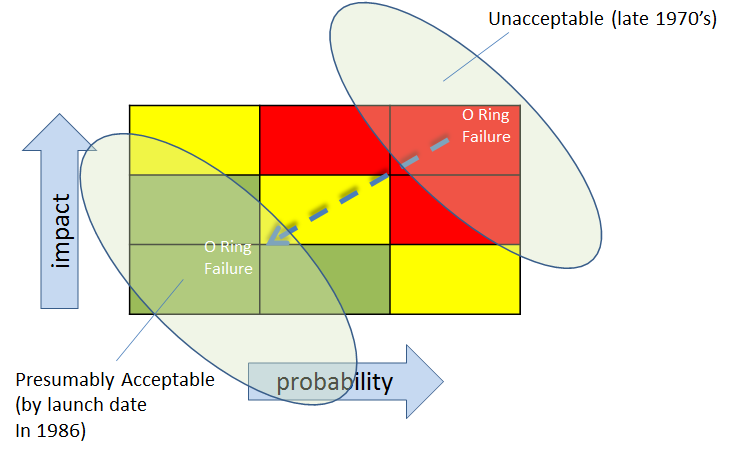
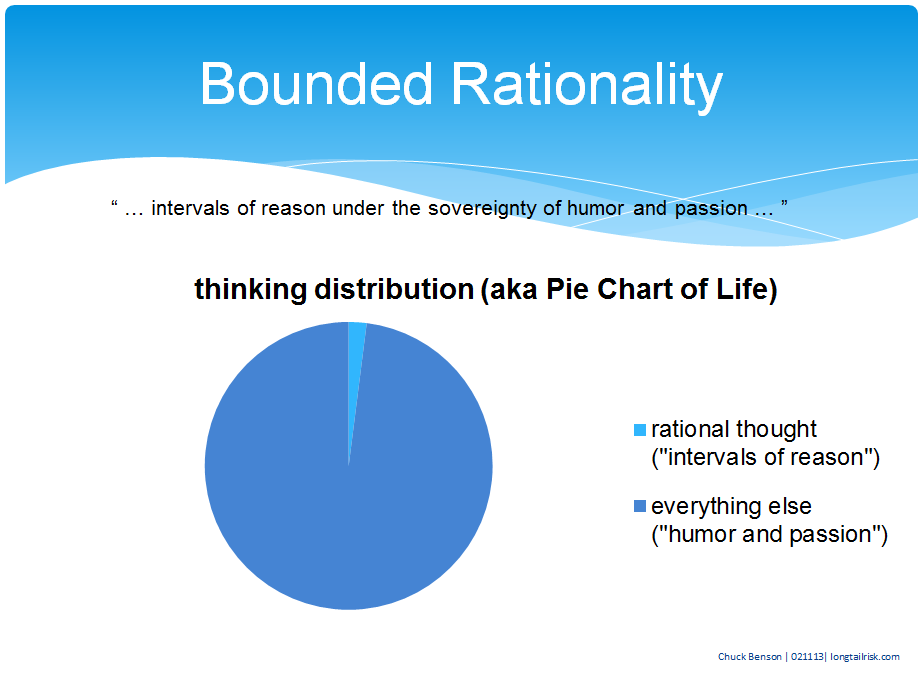
Slide from lectures -- Building an Information Risk Management Toolkit -- Week 9

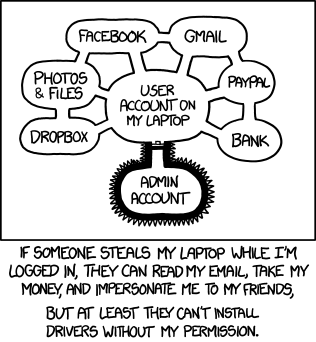
Slide from lectures — Building an Information Risk Management Toolkit — Week 9

Check out my Information Risk Management lecture videos on Coursera.org — Building an Information Risk Management Toolkit — Week 9.  (Click on Video Lectures on left & then go to Week 9.  The video “Bounded Rationality” is a good place to start).

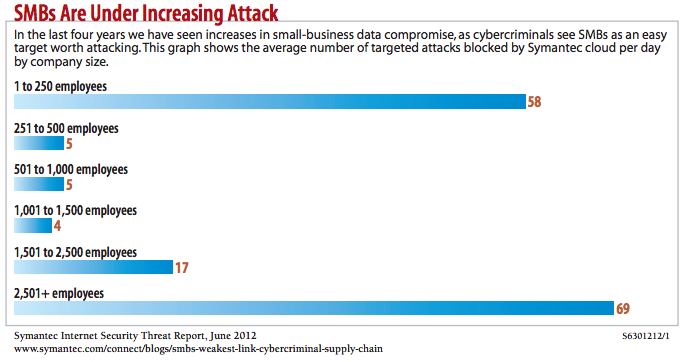
Cloud Security Alliance Establishes SMB Working Group

The Cloud Security Alliance (CSA) has established a new working group for small and medium sized businesses.  The group plans to:

  • Provide guidance to SMB’s on cloud services
  • Help cloud providers better understand the SMB market and SMB needs
  • Create an SMB version of the CSA Security Guidance along with supporting materials
  • Organize online workshops to identify SMB cloud services requirements
  • Issue a CSA SMB Cloud Guidance document by the end of the year

This is a good thing …

More here

Frog Boiling and Shifting Baselines

There is an apocryphal anecdote that a frog can be boiled to death if it is placed in a pan with room temperature water and then slowly heating the water to boiling. The idea is that the frog continues to acclimate to the new temperature which is only slightly warmer than the previous temperature (if the temp went up in incremental chunks) and so it is never in distress and never tries to jump out. A less PETA-evoking metaphor is that of a ‘shifting baseline’ which was originally used to describe a problem in measuring rates of decline in fish populations. The idea here is that skewed research results stemmed from choosing a starting point that did not reflect changes in fish populations that had already occurred which resulted in an order of magnitude of change that was not accounted for.

We can also see this sort of effect in risk management activities where risks that were initially identified with a particular impact and likelihood (and acceptability) seem to slide to a new place over time on the risk heat map. This can be a problem because often the impact and the probability did not change and there’s no logical reason for the level of risk acceptability to have changed. I believe this slide can happen for a number of reasons:

  • we get accustomed to having the risk; it seems more familiar and (illogically) less uncertain the longer we are around it
  • we tell ourselves that because the risk event didn’t happen yesterday or the day before, then it probably won’t happen today either. This is flawed thinking! (In aviation we called this complacency).
  • we get overloaded, fatigued, or distracted and our diligence erodes
  • external, financial, and/or political pressures create an (often insidious) change in how we determine what risk is acceptable and what is not. That is, criteria for impact and/or probability is changed without recognition of that change.

Challenger Disaster
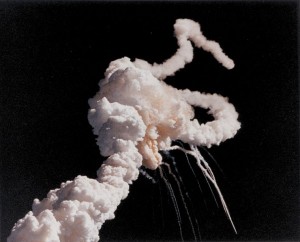
Challenger_explosion

Challenger plume after explosion

In 1986, the Space Shuttle Challenger exploded 71 seconds after liftoff. The Rogers Commission, established to investigate the mishap, created a report and panel debrief to include the testimony by the iconic Richard Feynman. Chapter 6 of the report, entitled “An Accident Rooted in History” opens with, “The Space Shuttle’s Solid Rocket Booster problem began with the faulty design of its joint and increased as both NASA and contractor management first failed to recognize it as a problem, then failed to fix it and finally treated it as an acceptable flight risk.” (italics added) Let’s recap that:

  • initially failed to formally recognize it as a problem (but later did)
  • failed to fix it
  • morphed into an acceptable flight Risk

When further testing confirmed O Ring issues, instead of fixing the problem, “the reaction by both NASA and Thiokol (the contractor) was to increase the amount of damage considered ‘acceptable’.” That is, in effect, they changed criteria for risk.  Implicitly, and by extension, loss of life and vehicle was now more acceptable.
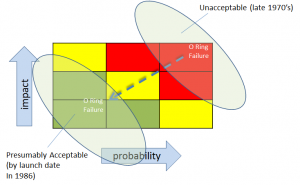
 

For risk to become acceptable, the criteria for impact and/or probability would have had to change -- even if implicitly

For risk to become acceptable, the criteria for impact and/or probability would have had to change — even if implicitly

Physicist Richard Feynman, on the Commission, observed:

“a kind of Russian roulette. … (The Shuttle) flies (with O-ring
erosion) and nothing happens. Then it is suggested, therefore, that
the risk is no longer so high for the next flights. We can lower our
standards a little bit because we got away with it last time. … You
got away with it, but it shouldn’t be done over and over again like
that.”

This is the sort of frog boiling or baseline shifting that we talked about earlier. Though there were many contributing factors, I believe that one of them was that they simply got familiar with and comfortable with the risk. In a way, the risk was ‘old news’.

Frog Boiling in Information Risk Management

This kind of frog boiling or baseline shifting can happen with Information Risk Management as well. As we become inundated with tasks, complexity, and knowledge of new threats and vulnerabilities, it can be tempting to reduce the importance of risk issues that were established earlier. That is, we can have a tendency to put a higher priority on the issue(s) that we have been most recently dealing with. If we are not careful, the perceptions of earlier risks can actually change.  Gregory Berns discusses perception change in his book, Iconoclast.

It’s one thing to consciously re-evaluate our tolerance for difference types of risk because we have new information and new things to consider, but it is another to let our tolerance for risk slide because of fatigue, ‘information overload’, political pressure, or distraction.

More than once I’ve picked up an older Information Risk Register & Heat Map and reminded myself that there were unmitigated risks that were still there. Yes, since that time, I had new risks to deal with, but that didn’t mean that the original ones went away.

One way to help us address this non-overt perception change is to use our earlier Risk Registers and Heat Maps.

      • Look at it again.
      • Did the original issues really go away?
      • Did their impacts or likelihoods really lessen?

It may well be that with new knowledge of threats, vulnerabilities, and capabilities, that we have to revisit and adjust (usually increase) our tolerance for risk given our limited resources. That is fine and appropriate. However, this needs to be a conscious effort. Changing the importance of a risk issue, whether it be its impact or probability, because we are tired, overwhelmed, or because the issue is ‘old news’ doesn’t help us. We need to be methodical and consistent with our approach. Otherwise, we are just fooling ourselves.


Have you had to change your risk tolerance in your organization?  Have you had to change your criteria for impact and probability? What were driving factors for re-assessing how you measure risk impact?

 

Federal court rules SMB — not bank — liable for loss from online theft

Even though Uniform Commercial Code places loss risk with banks for unauthorized transfers, a Federal court ruled against an SMB in Missouri last month and with the larger bank — primarily because the SMB did not implement fraud prevention controls offered by the bank.  This resulted in a $440,000 loss for the SMB.  Here’s the nutshell version:

  1. SMB has business account with bank
  2. Bank offers security (fraud prevention) controls for SMB
  3. SMB declines to implement controls (twice)
  4. SMB computer hacked & SMB’s credentials used to transfer money from its bank to Cyprus bank
  5. SMB sues bank for loss stemming from stolen funds
  6. Federal court rules against SMB and with bank
  7. SMB out $440,000 plus legal expenses

If this indeed sets precedent, this further increases SMB business risk.

Some lessons learned:

  • If your bank offers recommended security services or tools, use them (unless you can show that this directly and materially negatively impacts your business)
  • Use Positive Pay where list of authorized checks are provided to the bank via separate channel (i.e. bank has to cross check against that list prior to paying checks/requests presented to them)
  • Use a dedicated computer for banking transactions
  • Use two-factor authentication where possible
  • If not using Positive Pay or similar service, establish criteria with your bank for when they should alert you that a check or transfer request seems unusual

 More here in this Dark Reading story.

Risk Managing Residual Old-School Devices

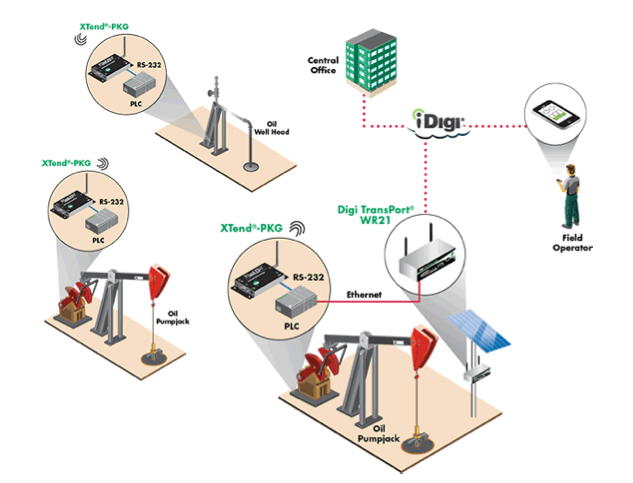
I’ve encountered this risk discussed in this Forbes article more than once when taking over an organization and doing an initial information risk assessment.  People tend to forget that these embedded devices can have simple or full fledged Linux distributions (or other OS) in the firmware.  Also, the default ports that were left open can be eye opening.

An image from H.D. Moore's presentation on serial server security vulnerabilities, showing an oil and gas infrastructure setup networked with serial port connections. (via Forbes.com)

An image from H.D. Moore’s presentation on serial server security vulnerabilities, showing an oil and gas infrastructure setup networked with serial port connections. (via Forbes.com)

Researcher’s Serial Port Scans Find More Than 100,000 Hackable Devices, Including Traffic Lights And Fuel Pumps

Risk Mapping: Determining Impact & Probability in the movie Aliens

In describing the Alien threat that they (Ripley and the tactical team) are facing as the evening wears on, the young female protagonist, Newt,  states:

“They mostly come out at night. Mostly.”

When Ripley tries to assuage her by sharing that there are armed soldiers to protect her, Newt states:

“It won’t make any difference”

Newt and Ripley

Newt and Ripley

Analysis: 

Let’s define this particular Risk Register item “Alien attack at night”

We have it from a first-hand observer of multiple instances of Alien attack, Newt, that they mostly come out at night. (Mostly).  If we’re using Low, Medium, & High to represent probabilities  0 < p < 33%, 33% < p < 67%, 67% < p < 100%, respectively, then I think we can safely convert these observations to High likelihood of Alien attack at night.

We have direct observations of destruction and further interviewing of a first hand observer who shares that having several well-armed soldiers in place “won’t make any difference”.  Given this information and defining Impact as Low = no fatalities/minor injuries, Medium = 1 to 3 fatalities (or capture with subsequent implantation & cocooning) & severe injuries , and High = greater than 3 fatalities (or capture w/subsequent implantation & cocooning) & very severe injuries (that includes Alien acid-blood burns), I believe that we can call this a High Impact.

If Hudson were keeping his Risk Register current, I think he could reasonably update with:

        • Risk Description: Alien attack @ night
      • Probability: High
      • Impact: High


How would you assess this situation?

Verizon Data Breach Study & SMB Factors

Verizon just released their 2013 Data Breach Investigations Report (DBIR).  It draws data from work done by several law enforcement agencies, incident-reporting groups, research institutions, and private security firms. It studies over 2,500 confirmed data breaches (representing more than 1 billion records).

Some observations from the report for all company sizes:

  • 75% of attacks were opportunistic, ie a specific company or individual was not directly targeted
  • Attackers consisted of activists, criminals, & spies
  • Of the cases of insider sabotage, 50% came from old accounts or back doors that had not been disabled
  • The vast majority of attacks (68%) were considered “Low” difficulty (meaning basic attack methods with little or no customization required)
  •  ‘Unapproved’ hardware accounted for 41% of misuse
  • It is taking longer to discover breaches, up 10% from 2012.  This means that the bad guy can operate at will for longer periods of time.

Some observations for small and medium sized businesses (employee count < 1000):

  • In companies less than 100 in size, retail had an exceptionally large exposure, followed by food services companies
  • 57% of attacks were from organized crime and 20% were state-affiliated
  • 72% of attacks were from hacking, 54% from malware, and 32% from social media
  • In 86% of the attacks, spyware or keyloggers were installed as a part of the attack
  • SMB’s are at higher risk for ransomware schemes
  • Desktop sharing was primary attack vector for hacking attacks for SMB’s
  • Email was primary vector for social attacks
  • Unapproved hardware contributed to misuse in 52% of cases in small & medium sized companies (compared with only 22% of large companies)
  • Point of Sale devices most often attacked information asset for SMB’s

2013 Data Breach Investigations Report

Executive Summary